Audio Visual Installers London

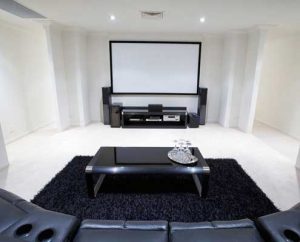
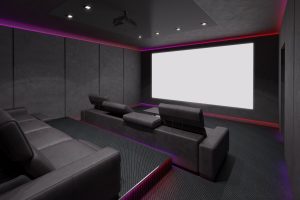
Expert Audio Visual installation
Expert Audio Visual Installers in London providing professional design, setup, and integration for homes and businesses. From conference rooms and boardrooms to home cinema and multi-room sound systems, we deliver high-quality AV solutions tailored to your needs. Enjoy seamless performance, crystal-clear sound, and stunning visuals from trusted London AV specialists.
Achieve perfect sound and visual quality with expert audio/visual installation services. Whether it's a concert hall or a conference room, ensure an immersive experience for your audience
Audio Visual or AV refers to anything that produces a visual image or sound in order to communicate. AV equipment can be found in every imaginable setting. From our homes, commercial buildings, schools to billboards. This equipment is used for communication in our daily lives. As a well established data cabling company, NM Cabling has worked with some of the most popular names in hospitality, education, healthcare and many other industries. Furthermore, the vast experience we have has exposed us to many different requirements. As a result, our Audio Visual Installers understand the importance of planning and designing to ensure that all potential hurdles are explored and dealt with.
Audio Visual Solutions
- Boardrooms
- Meeting Rooms
- Classrooms
- Lecture Theatres
- MDT Rooms
- Auditoriums
- Event Rooms
Audio Visual Installations (Common Cables)
Audio Visual Installations (Common Cables) refers to the wiring used to connect and transmit sound and video signals between AV equipment such as TVs, projectors, speakers, and control systems.
We take the time to understand your audio visual requirements and how you plan to use the system before installation.. By doing so, we can make sure every appropriate cable is fitted, such as:
- HDMI Cables - For high definition video and audio
- DisplayPort Cables - For computer monitors
- DVI Cables - For computer monitors
- VGA Cables - For projectors and monitors
- RCA Cables - For standard video and audio
- Optical Fibre Cables - For high quality audio
HDMI Cable
HDMI cables are the standard for connecting high-definition TVs, Blu-ray and DVD players, gaming consoles, and computers.
There are three main types of HDMI cables: Standard, High Speed, and Premium High Speed. Standard HDMI cables are designed for resolutions up to 1080p and are perfect for most home theatre applications. High Speed HDMI cables are designed for resolutions up to 4K and can also be used with 3D TVs and Blu-ray players. Premium High Speed HDMI cables are the newest type of HDMI cable and are designed for resolutions up to 8K.
Jack cables
A jack cable is a type of audio cable that is used to connect audio devices together. It is typically used to connect an audio source to an amplifier or receiver. Jack cables come in a variety of sizes and can be either mono or stereo.
XLR cables
An XLR cable is a type of audio cable typically used in live sound applications. XLR cables are designed to carry audio signals. Commonly, they're used to connect microphones to mixing consoles. These cables can also be used to connect other types of audio equipment, such as amplifiers or speakers.
XLR cables are typically made from copper wire and are shielded to protect against interference. The connectors on XLR cables are usually made from metal, and the cable is often jacketed in PVC or other type of insulation. XLR cables are available in a variety of different gauges, or thicknesses, depending on the application.
DVI Cable
A DVI cable is a type of video cable that is used to connect a computer to a monitor or other display device. Furthermore, DVI cables are available in both digital and analogue versions. Generally, the digital version of the DVI cable is used for high-definition video. While the analogue version is typically used for standard-definition video.
VGA Cable
The term "VGA" is an abbreviation for "Video Graphics Array." The VGA standard was introduced in 1987 by IBM, and has since become a de facto standard for analogue video connectors.
A VGA cable is an analogue video cable used to connect a computer's video output to a display device such as a monitor or projector. It is also commonly used to connect computers to TVs. The cable typically has three rows of five pins, and is referred to as a 15-pin connector.
RCA Cable
RCA cables are used to connect a wide variety of audio and video equipment, including televisions, DVD players, VCRs, and stereos. They are also commonly used to connect these devices to speakers or other audio/video components.
An RCA cable is a type of electrical cable used to connect audio and video equipment. The cables are typically composed of three shielded coaxial cables (red, white, and yellow) wrapped in a single outer sheath. The red and white cables carry the left and right audio signals, respectively, while the yellow cable carries the video signal.
Display port cable
A display port cable is a type of cable used to connect computer displays and other devices with a display port. Display ports are found on many different types of devices, including computers, monitors, and TVs. Display port cables come in a variety of different sizes and can be used for both digital and analogue signals.
Optical fibre cable
An optical fibre cable is a type of cable that is made from thin strands of glass or plastic. These cables are used to transmit data in the form of light signals. Optical fibre cables are much thinner and lighter than traditional metal cables, and they can carry data over longer distances with less signal loss. Optical fibre cables are typically used in long-haul communications applications such as long-distance telephone lines and high-speed Internet connections.
Can fibre be used in AV installations?
Fibre optics play an important role in Audio Visual (AV) installations, providing high quality connections between different types of equipment. Fibre optic cables are often used to connect AV equipment such as TVs, DVD players and projectors to each other and to the rest of the home entertainment system.
Fibre optic cables offer a number of advantages over traditional copper cables, including:
Higher bandwidth: Fibre optic cables have much higher bandwidth than copper cables, meaning they can carry more data. This is important for AV installations where high quality video and audio are essential.
No interference: Fibre optic cables are immune to electromagnetic interference (EMI), which can degrade the quality of the signal carried by copper cables. As a result, this makes fibre optics the ideal choice for AV installations where interference from other electrical equipment could be a problem.
Immunity to ground loops: Ground loops can cause interference problems with audio and video signals carried by copper cables. Fibre optic cables are not affected by ground loops, making them the preferred choice for AV installations.
Improved durability: Fibre optic cables are much more durable than copper cables, and are not susceptible to damage from water or other environmental factors. This makes them ideal for use in AV installations where the cables may be exposed to harsh conditions.
Claim Your Free AV Site Survey
Book your Free Audio Visual Installation Survey today and receive expert advice to optimise your home or business setup for flawless sound and visuals..
Simply fill in your details and one of our engineers will be in touch to arrange your on-site assessment.
-
Data Cable Installation
-
NM Cabling Renews SafeContractor Accreditation 2026
-
Warehouse Wi‑Fi Solutions
-
Cat6e Cable
-
10 Questions to Ask Your Data Cabling Company
-
Wired or Wireless Security Cameras?
-
June 2025 Project Summary
-
Commonly Asked Questions About CCTV Systems in the UK
-
10 Common Data Cabling Problems and How to Solve Them
-
Cat 7 vs Cat 8 Cables