How Extension Leads Can Become a Fire Risk
Extension leads are generally safe when used correctly, but overloading, damage or incorrect use can cause them to overheat and potentially start a fire. Here’s what you need to know:
Common Problems with Extension Leads:
- Poor Placement:
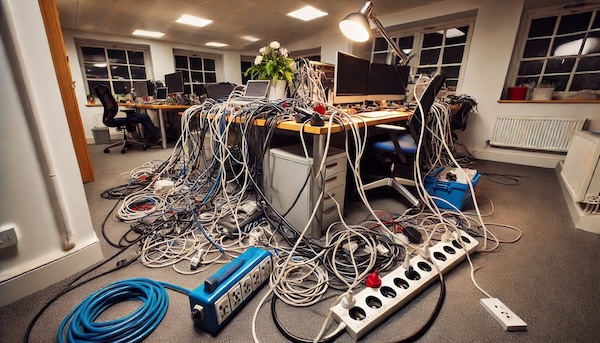
- Leaving extension leads unsecured or uncontained within desks can create trip hazards.
- If they cross access routes, they pose a significant risk to both safety and productivity.
- Cable Damage:
- Extension leads that are repeatedly stepped on or snagged by chairs and feet can suffer wear and tear.
- Damaged cable sheaths can expose wires, increasing the risk of electric shock or short circuits.
- Daisy-Chaining:
- Plugging one extension lead into another (known as “daisy-chaining”) to create additional sockets can overload the circuit.
- This overload can result in overheating and potentially cause a fire.
- Coiled Extension Leads:
- Using an extension lead while it’s still coiled restricts heat dissipation.
- Overheating in such cases is a serious fire hazard, particularly under heavy electrical loads.
How to Use Extension Leads Safely
- Plan Your Setup
Make sure your workspace has enough wall sockets and floor boxes to reduce the need for extension leads. - Secure Positioning
Keep extension leads out of walkways and ensure they are safely tucked under desks or fastened to prevent tripping hazards. - Inspect Regularly
Check your cables periodically for any signs of wear, such as cuts, fraying, or exposed wiring, and replace damaged leads immediately. - Avoid Overloading
Do not daisy-chain multiple extension leads or exceed the manufacturer’s recommended load capacity. - Uncoil Completely
Always fully unwind coiled extension leads before use to prevent overheating and allow proper heat dissipation.
Best Practices for Installing Extension Leads
To ensure safety and efficiency when using extension leads, follow these best practices:
- Use Manufacturer-Assembled Leads
- Only use extension leads assembled and tested by the manufacturer.
- Plug each extension lead into a dedicated wall socket or floor box, avoiding shared or overloaded connections.
- Opt for Surge Protection
- Use surge-protected extension leads to safeguard sensitive equipment from power surges and spikes.
- Choose the Correct Rating
- Select an extension lead with the appropriate voltage and current rating for the devices you intend to power.
- Secure Installation
- Prevent trip hazards and cable damage by securing extension leads properly:
- Use desk cable management systems or cable spines to contain cables.
- Avoid leaving any part of the extension lead on the floor where it can be tripped over, snagged, or damaged.
- Prevent trip hazards and cable damage by securing extension leads properly:
- Avoid Overloading
- If your office setup requires frequent use of large extension leads or joined leads (“daisy-chaining”), consider upgrading your infrastructure:
- Install additional wall or floor electrical sockets to meet your power needs safely.
- If your office setup requires frequent use of large extension leads or joined leads (“daisy-chaining”), consider upgrading your infrastructure:
Free Electrical Survey
Ensure Safety & Compliance from the Start
Claim Your Free Site Survey
Free Data Electrical Site Survey – Let Our Experts Plan Your Network
Simply fill in your details and one of our engineers will be in touch to arrange your on-site assessment.